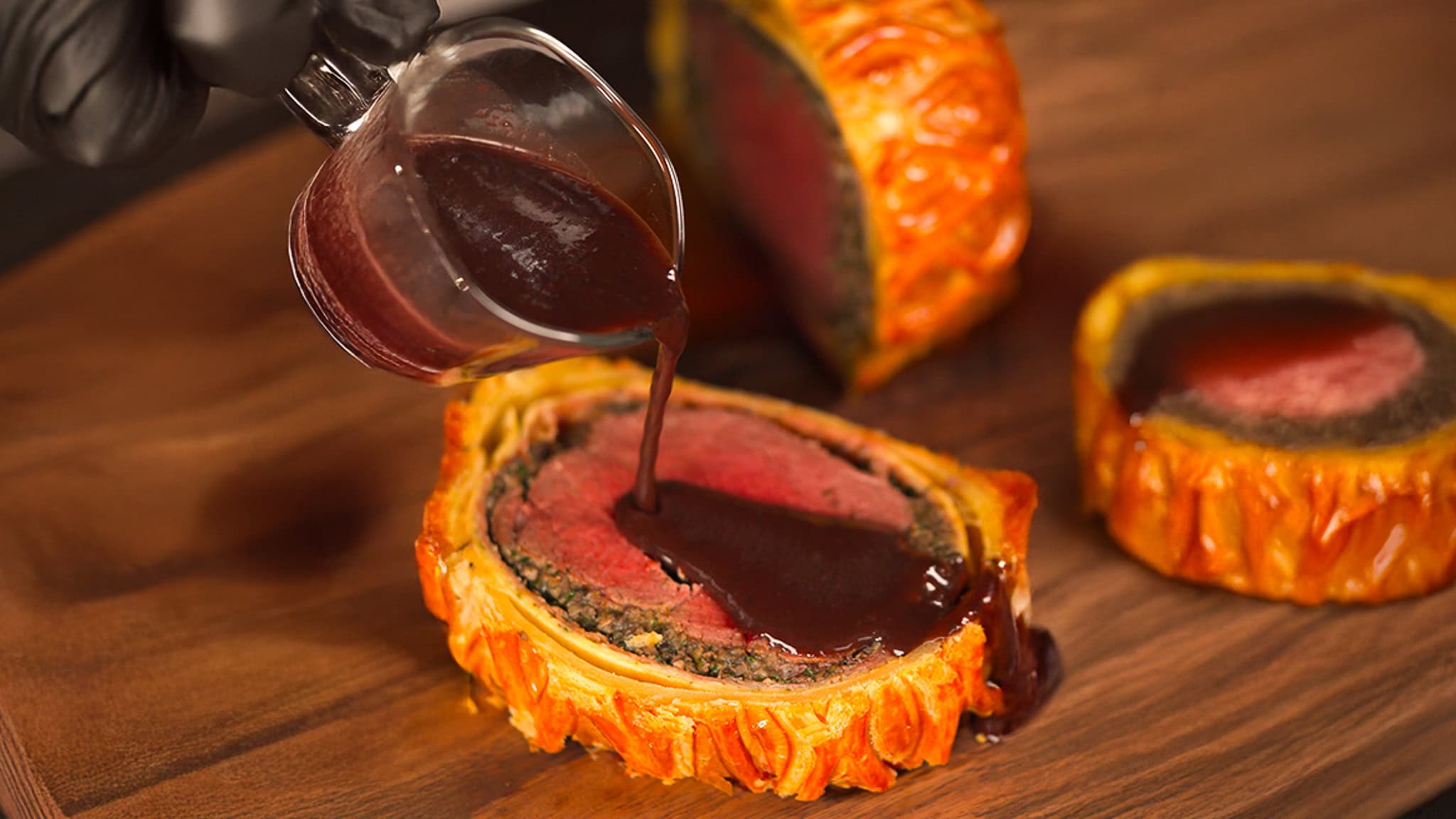
Master Beef Wellington: A Culinary Journey with Truffle Red Wine Sauce
Few dishes command attention quite like a perfectly executed Beef Wellington. It's more than just a meal; it's a statement, a centerpiece of elegance and flavor that transforms any gathering into a truly special occasion. Imagine a succulent, medium-rare beef tenderloin, encased in a savory mushroom duxelles, salty prosciutto, a protective crepe, and finally, a golden, flaky puff pastry, all elevated by an exquisite truffle red wine sauce. While its grandeur might suggest complexity, fear not – this article will guide you through mastering this classic English dish, infused with French techniques, making it achievable for your next impressive dinner party.
Often perceived as intimidating, expensive, and technically tricky, the truth is that with the right guidance, the secrets to an outstanding Beef Wellington are within reach. We're here to demystify the process, breaking down each critical step to ensure your success. And to truly transcend the ordinary, we're pairing this masterpiece with a luxurious homemade beef wellington with truffle and red wine sauce – a combination that delivers an unforgettable sensory experience.
Why This Recipe Promises Success (And How You Can Master It!)
The thought of investing in a brilliant, expensive piece of beef and potentially "ruining" it can be daunting. We understand. However, after extensive testing, we've identified the specific steps that guarantee success, transforming a perceived culinary challenge into a rewarding triumph. While the traditional Beef Wellington recipe is renowned and rightfully so, our approach enhances it with a phenomenal sauce and focuses on meticulous detail to prevent common pitfalls.
The brilliance of this particular recipe lies in two key areas: an unparalleled flavor pairing and precise moisture control. While a classic Wellington is delicious on its own, adding a rich red wine sauce infused with the earthy luxury of truffle elevates it to an entirely new level. This sauce isn't merely an accompaniment; it's a perfect complement, designed to highlight the beef's richness and the pastry's crispness. Equally critical is mastering moisture. We achieve this through two essential techniques: cooking the mushroom duxelles until it's "bone dry" and incorporating a thin crepe layer. These steps are paramount in protecting your precious puff pastry from becoming soggy, ensuring that irresistible flaky texture in every bite.
The Quintessential Layers: Building Your Perfect Beef Wellington
Just like a fine piece of art, a truly magnificent Beef Wellington is built layer by layer, with each component playing a crucial role. Understanding these "inside matters" is fundamental to achieving perfection. Here are the five essential layers:
- The Tenderloin (Filet Mignon): This is the heart of your Wellington. We recommend using the center cut, often referred to as Chateaubriand. Its uniform size is vital, ensuring even cooking throughout. Before wrapping, a quick, high-heat sear on all sides not only develops a beautiful crust but also locks in the juices, adding an extra dimension of flavor. Remember to let it cool completely after searing before proceeding.
- The Duxelles: A French term for finely chopped mushrooms, onions, and herbs cooked down to a concentrated paste. This layer is an absolute flavor bomb, adding incredible umami and depth. The secret here is to cook it until it's incredibly dry – nearly paste-like. Any residual moisture will steam and make your pastry soggy. For the best flavor, consider a mix of cremini and shiitake mushrooms, finely minced and slowly sautéed.
- The Prosciutto: More than just adding a delightful saltiness, the prosciutto acts as a crucial moisture barrier between the beef and the pastry. It helps to keep the beef's juices from migrating outwards. For the best results, seek out Prosciutto di Parma from your deli counter and ask for it to be sliced wafer-thin. Pre-packaged varieties can often be thicker and tougher, potentially tearing your delicate Wellington when sliced.
- The Thyme Crepe: This layer is non-negotiable for success. A very thin, savory crepe, subtly flavored with thyme, envelops the prosciutto-wrapped beef. Its primary function is to absorb any remaining moisture released by the beef during cooking, acting as the final line of defense for your puff pastry. Don't skip this step; it's the unsung hero ensuring your pastry remains beautifully flaky, not wet. Making thin crepes can seem intimidating, but a non-stick pan and a ladle of batter swirled quickly will yield perfect results.
- The Puff Pastry: The glorious, golden crust that enrobes it all. The quality of your puff pastry makes a monumental difference. Always opt for all-butter puff pastry. Cheaper alternatives often use vegetable oils or shortening, which can leave a greasy, waxy residue. Butter pastry, on the other hand, is rich, melts in your mouth, and delivers that quintessential flaky texture. Keep it well-chilled until just before you're ready to use it, as butter melts quickly, making the pastry harder to work with.
Crafting the Star Sauce: Truffle Red Wine Perfection
While the Wellington itself is a masterpiece, the Elevate Your Dinner: Beef Wellington with Truffle Red Wine Sauce truly takes this dish from excellent to extraordinary. This rich, aromatic sauce is designed to complement, not overpower, the delicate flavors of the beef and mushroom. Its deep, savory notes, combined with the earthy perfume of truffle, create an exquisite pairing that lingers on the palate.
To craft this stellar sauce, begin by sautéing finely minced shallots and garlic until fragrant. Deglaze the pan with a good quality dry red wine – a Cabernet Sauvignon or Pinot Noir works beautifully – scraping up any browned bits from the pan. Allow the wine to reduce significantly, concentrating its flavors. Then, add a rich beef stock or broth and simmer until the sauce thickens to your desired consistency. You can naturally thicken it through reduction or by whisking in a cornstarch slurry or a small amount of beurre manié (equal parts softened butter and flour kneaded together).
The truffle element is where the magic truly happens. For an authentic flavor, a drizzle of high-quality truffle oil at the end is effective, but for a more profound aroma, consider incorporating a spoonful of black truffle paste or, if accessible, shaving fresh truffles directly into the warm sauce just before serving. Taste and adjust seasonings, ensuring a perfect balance of savory, acidic, and earthy notes. This beef wellington with truffle and red wine sauce is the secret weapon that elevates your entire culinary experience.
Assembling Your Culinary Masterpiece & Expert Tips
Assembling the Beef Wellington is where all your careful preparation comes together. Start by laying out the prosciutto, followed by the duxelles, then the crepe, gently wrapping it around your seared and cooled tenderloin. Finally, encase the entire package in puff pastry, sealing the edges carefully. With your masterpiece ready, here are some crucial tips for guaranteed success:
- Chilling is Key: After searing the beef, ensure it's completely cooled. Once wrapped in its layers, chill the entire Wellington for at least 30 minutes (or even overnight) before baking. This helps the pastry firm up and prevents it from spreading too quickly in the oven.
- Egg Wash for Gold: Before baking, brush your Wellington generously with an egg wash (beaten egg yolk with a splash of water or milk). This creates that iconic, beautiful golden-brown, shiny crust.
- The Meat Thermometer is Your Best Friend: For perfectly medium-rare beef (our recommendation), aim for an internal temperature of 125-130°F (52-54°C) when it comes out of the oven. Remember, the temperature will rise slightly as it rests.
- Rest, Rest, Rest: This is perhaps the most critical step after baking. Let your Beef Wellington rest for at least 15-20 minutes before slicing. This allows the juices to redistribute throughout the meat, ensuring every slice is incredibly tender and moist.
- Sharp Knife for Clean Slices: Use a very sharp, serrated knife to achieve clean, impressive slices without tearing the pastry or squishing the tenderloin.
- Don't Rush the Process: While we've made this recipe approachable, it's not a quick weeknight meal. Embrace the process, enjoy the creation, and you'll be rewarded with an unforgettable dish. For a deeper dive into each layer, explore our guide on Perfect Beef Wellington: Master the 5 Layers & Truffle Red Wine Sauce.
Serving your Master Beef Wellington with the luxurious truffle red wine sauce, alongside simple accompaniments like roasted asparagus, garlic mashed potatoes, or a light green salad, creates a truly impressive spread that your guests will talk about for years.
Conclusion
From its mysterious origins to its undeniable presence on the plate, Beef Wellington remains a timeless culinary marvel. By understanding its fundamental layers, mastering moisture control, and enhancing it with our divine beef wellington with truffle and red wine sauce, you're not just cooking; you're crafting an experience. This recipe empowers you to tackle what was once considered a daunting task, transforming it into an accessible, rewarding, and utterly delicious achievement. So go ahead, don your apron, gather your ingredients, and prepare to impress yourself and your loved ones with a Beef Wellington that is nothing short of extraordinary.
